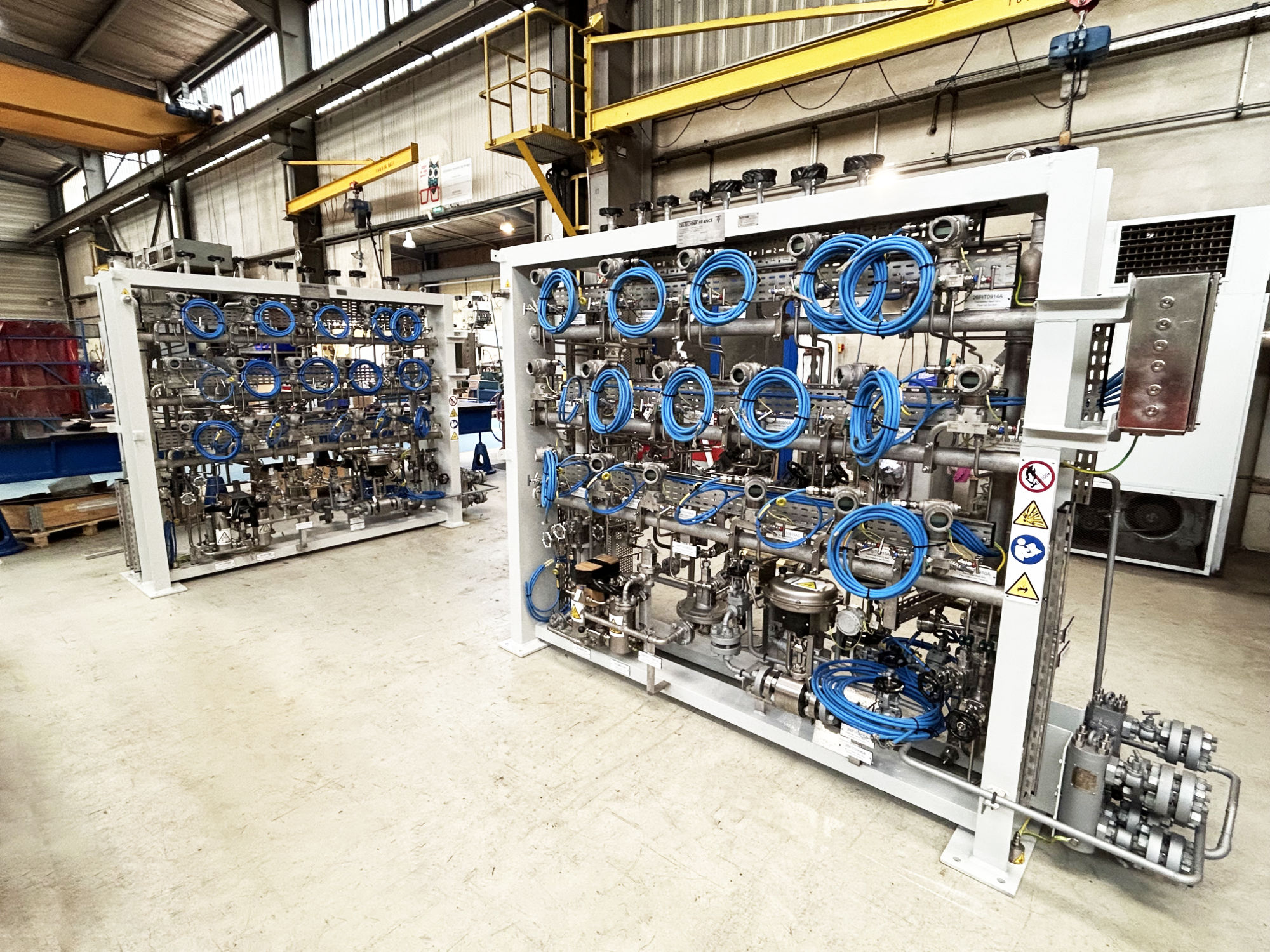
Gas panel revamping is a key step in ensuring the reliability, safety, and regulatory compliance of compression systems on offshore platforms. In a demanding environment subject to strict standards and high safety requirements, refurbishing gas seal panels extends the service life of installations while maintaining their operational performance.
Project Background
This project involves the reconditioning of two gas seal panels dedicated to a compressor installed on an offshore platform.
As the original gas panel manufacturer was not Oeltechnik-France, a detailed assessment of the existing equipment was required to ensure an upgrade fully compliant with current requirements.
Originally, the package including the gas seal panel was DNV certified, requiring strict adherence to design, manufacturing, and inspection standards throughout the revamping operations.
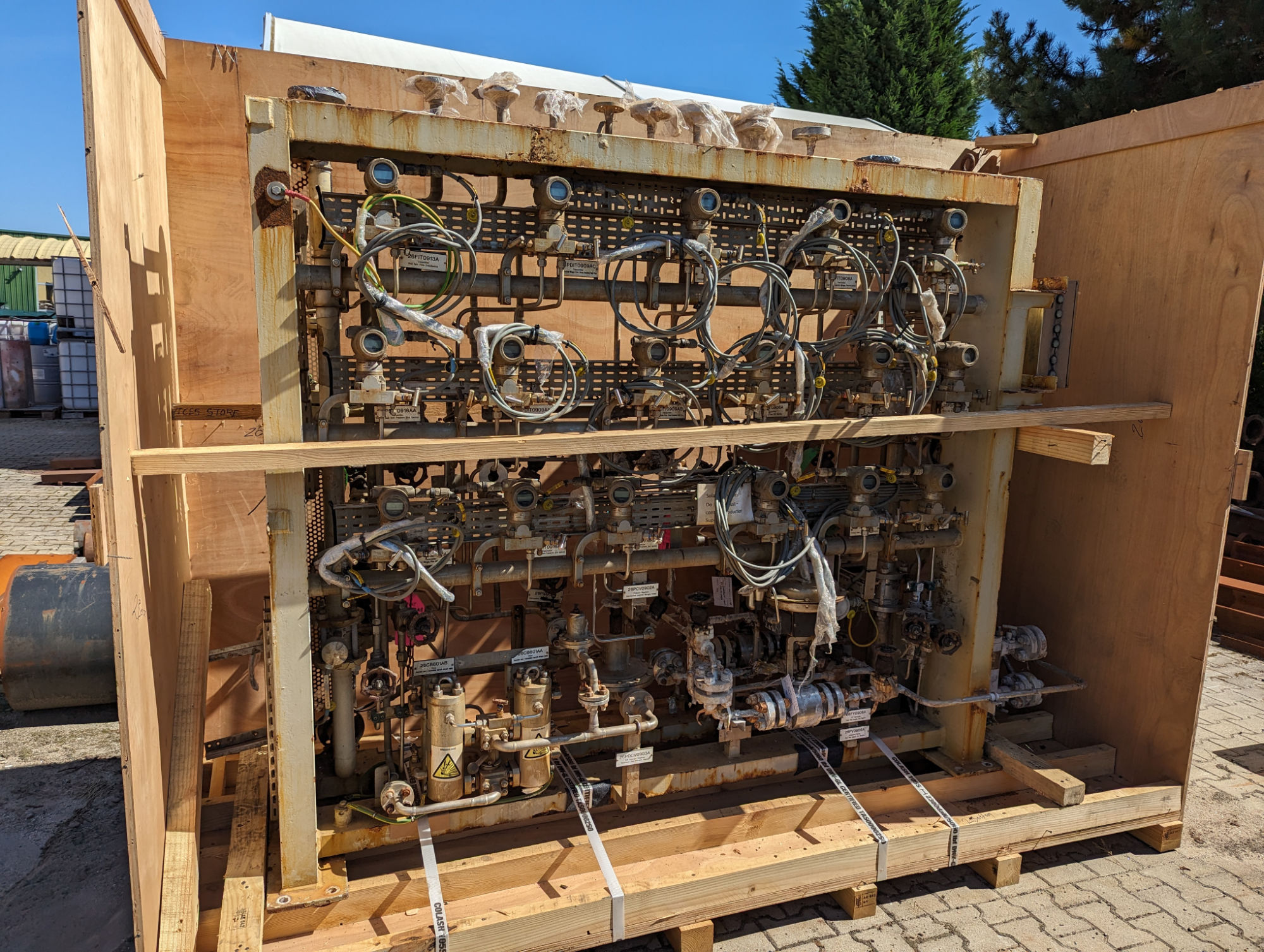
State of the seal gas panels as it arrived for reconditioning :
Engineering Studies and Regulatory Compliance
The engineering department produced all piping isometrics based on the existing installation, enabling a refurbishment faithful to the original configuration while integrating current operational constraints.
The works were carried out in compliance with:
- NACE MR-0175 standard, applicable to corrosive environments
- Original piping classes and P&IDs
- PED requirements applicable to specific pressurized lines
- ATEX regulations, related to explosive atmospheres
Piping Works and Non-Destructive Testing
As part of the gas panel revamping, sections of piping were replaced or repaired, particularly when replacing welded valves.
Non-destructive testing (NDT) was performed in accordance with the original requirements confirmed by the client:
- Radiographic Testing (RT):
- 100% on primary seal gas injection lines (1500 lbs class)
- 5% on nitrogen and primary vent lines (150 lbs class)
- Penetrant Testing (PT):
- 100% on primary seal gas injection lines (1500 lbs)
- 5% on nitrogen and primary vent lines (150 lbs)
All welded repairs were followed by radiographic inspections to ensure piping integrity.
Mechanical Refurbishment and Instrumentation
The project included a complete refurbishment of all equipment forming the gas panel:
- replacement of all instruments and transmitters
- replacement of PCVs and all valves
- refurbishment of the duplex filter by the manufacturer
- replacement of rupture discs
- complete refurbishment of junction boxes
- full renewal of electrical cabling
- replacement of all tubing lines
Frame, Painting, and Identification
The gas panel frame was refurbished through:
- grit blasting
- structural repairs
- application of paint in accordance with the original specification
A complete new tagging system was implemented, including:
- replacement of all labels
- installation of safety labels compliant with offshore requirements
Dimensional Control and Reassembly
To ensure reassembly fully compliant with the existing installation, dedicated mock-ups were manufactured to maintain the exact flange positions specific to each gas panel.
Complete reassembly was then carried out in the workshop, incorporating all repairs and replacements performed.
Testing and Final Compliance
Prior to delivery, the gas panels underwent all required tests:
- hydrostatic pressure tests with recording via chart recorder
- leak tests
- complete line flushing
These final steps ensure the reliability, safety, and compliance of the gas panels before recommissioning on the offshore platform.
Conclusion
Gas panel revamping for offshore compressors represents a technical and cost-effective solution to extend equipment service life while meeting the most stringent international standards. Through full control of engineering, manufacturing, inspection, and testing, such projects ensure an optimal upgrade of critical installations in offshore environments.